

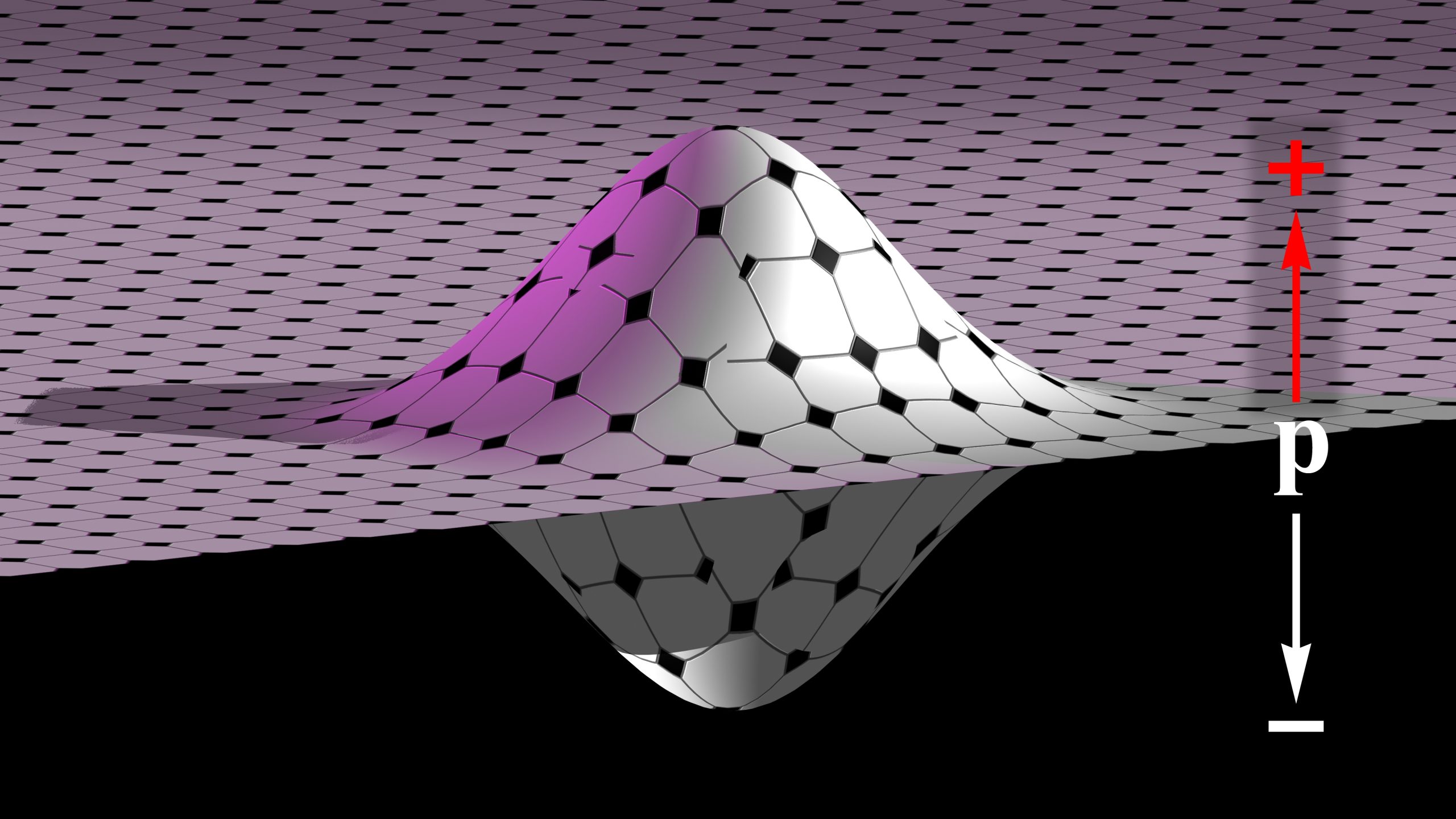
single photon appearance has intrigued scientists for years. Recent studies reveal stunning insights into how a single photon actually looks and behaves, challenging our understanding of light.
Understanding Photons in Physics
In the realm of physics, photons are the fundamental particles of light, serving as carriers of electromagnetic radiation. Understanding photons is essential for comprehending various phenomena in quantum mechanics. A single photon appearance refers to the way an individual photon manifests its properties in experiments.
Photon behavior can be perplexing, as it exhibits both wave-like and particle-like characteristics. This duality is famously illustrated in experiments such as the double-slit experiment, where light can create an interference pattern even when individual photons are fired one at a time.
Additionally, scientists have developed techniques to detect and visualize single photons, enhancing our understanding of quantum optics. These methods include:
- Superconducting nanowire single-photon detectors
- Single-photon avalanche diodes
- Quantum dots for photon generation
Through these advancements, researchers are unraveling the mysteries surrounding the single photon appearance and its implications for future technologies.
The Nature of Light
The nature of light has intrigued scientists for centuries, revealing complexities that challenge our understanding of the universe. At its core, light is both a wave and a particle, a duality that is beautifully exemplified by the concept of a single photon appearance. Photons are the fundamental particles of light, and their behavior can only be fully understood through quantum mechanics.
When discussing the appearance of a single photon, it is essential to consider the following characteristics:
- Wave-Particle Duality: Photons exhibit properties of both waves and particles, which complicates their visualization.
- Energy Levels: The energy of a photon determines its color in the visible spectrum, affecting how we perceive light.
- Quantum Behavior: A single photon can exist in multiple states until observed, showcasing its unique nature.
Understanding these aspects provides insight into how a single photon appears, pushing the boundaries of our knowledge in physics.
How Do Photons Behave?
Photons, the fundamental particles of light, exhibit intriguing behaviors that challenge our classical understanding of physics. Their most surprising characteristic is that they can exist in a state of superposition, allowing them to be in multiple places or states at once until observed.
This phenomenon raises the question of how we perceive a single photon appearance. While we cannot see a single photon with the naked eye, its effects can be observed in various experiments. For instance, when photons are directed through a beam splitter, they display wave-particle duality, behaving both as particles and waves.
Additionally, the interaction of photons with matter reveals their elusive nature. When a single photon strikes a detector, it can produce a cascade of secondary effects, allowing scientists to infer its presence. These behaviors highlight the complexity of photons and their role in the universe, further emphasizing the enigmatic concept of a single photon appearance.
- Superposition and observation
- Wave-particle duality
- Interactions with matter
Recent Discoveries in Quantum Science
Recent research in quantum science has unveiled fascinating insights into the single photon appearance. Scientists have developed innovative techniques to visualize and manipulate individual photons, leading to significant advancements in quantum communication and computing.
One notable discovery involved the use of advanced imaging systems that capture the subtle characteristics of single photons. This breakthrough allows researchers to observe how photons interact with their environment, providing a deeper understanding of their properties.
Key findings include:
- Enhanced clarity: The ability to distinguish single photons from background noise has improved imaging techniques in various applications.
- Quantum entanglement: Researchers have successfully demonstrated methods to entangle single photons, paving the way for more secure communication systems.
- Photonic devices: The development of photonic circuits utilizing single photons could revolutionize processing speeds in quantum computers.
These discoveries not only deepen our understanding of photons but also open up new possibilities in the realm of quantum technologies.
Visualizing a Single Photon
Visualizing a single photon has long been a challenge for scientists. Traditionally, photons, the fundamental particles of light, have been difficult to observe directly due to their fleeting nature. However, recent advancements in quantum science have paved the way for a better understanding of their appearance.
According to physicists, the single photon appearance can be described through various experimental setups that manipulate light at the quantum level. Here are some key methods used in these experiments:
- Quantum Dots: Tiny semiconductor particles that emit single photons when excited, providing a visual representation of their properties.
- Superconducting Nanowires: Devices that can detect individual photons, allowing scientists to visualize their impact on the material.
- Single-Photon Emitters: Specialized systems engineered to release one photon at a time, illustrating the behavior of light on a quantum scale.
These techniques not only enhance our understanding of a single photon appearance but also open new avenues for research in quantum computing and communication.
Implications for Future Research
The implications of single photon appearance extend far beyond mere visual representation, influencing various fields of research and technology. As scientists continue to unravel the complexities of photon behavior, several areas stand to benefit significantly:
- Quantum Computing: Understanding how single photons can be manipulated may lead to advancements in quantum information processing, enabling faster and more secure computations.
- Telecommunications: Improved photon appearance models could enhance optical communication systems, potentially leading to faster data transmission rates with minimized losses.
- Medical Imaging: Innovations in imaging techniques based on single photon detection can improve diagnostic capabilities, allowing for earlier detection of diseases.
- Fundamental Physics: Insights into the nature of single photons may challenge existing theories and contribute to new physics models that explain the universe’s workings.
As research continues, the exploration of single photon appearance promises to unveil groundbreaking applications that could revolutionize technology and our understanding of the physical world.
By Greg A L via Openverse